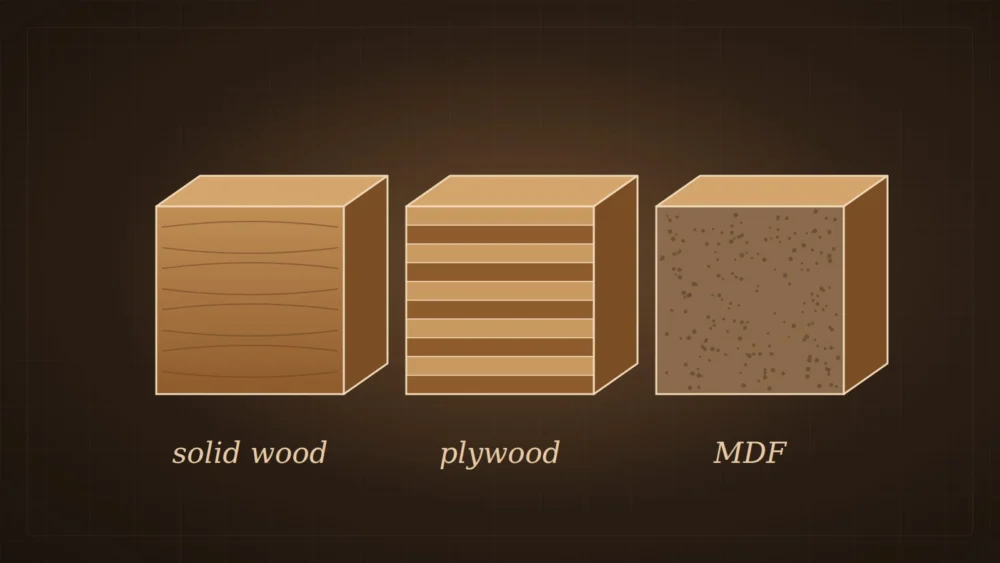
“Wood furniture” can mean anything from a single piece of teak to a veneered fibreboard. The label on the quotation matters, because the material decides price, weight, strength and how long the piece lasts.
- Solid wood is strong and repairable but moves with humidity and costs the most.
- Plywood is stable and strong for its weight; quality depends on the glue and the plies.
- MDF is smooth and cheap for painted surfaces but weak at edges and in water.
- The best furniture often combines them: solid frames with panels where stability matters.
Four materials compared
| Material | Strengths | Weak points | Typical use |
|---|---|---|---|
| Solid wood | Strength, repairable, natural grain | Moves with humidity, higher cost, needs good drying | Frames, legs, table tops, chairs |
| Plywood | Stable, strong for its weight, holds screws | Visible edges unless covered, quality varies with glue | Seats, cabinet panels, backs |
| MDF | Smooth, takes paint evenly, low cost | Heavy, weak at edges, poor with moisture | Painted doors, drawer fronts |
| Veneered panel | Real wood surface with panel stability | Thin surface; damage is hard to sand out | Cabinets, tops, large flat surfaces |
Why wood moves, and what to do
Solid wood takes in and gives off moisture as the air changes. Boards swell across the grain in damp months and shrink in dry ones. Good furniture allows for that movement with joints and frames that float. How well the wood is dried before it is built is just as important; read about moisture content and kiln drying.
How to write the material line
- Name each part, not the whole piece.For example “frame: solid wood, seat: plywood with foam and fabric, back panel: veneered plywood”.
- State species and grade.“Solid wood” alone is not a specification. Name the species and the grade of the visible surfaces.
- Ask about glue and panel standards.For panels, ask which emission class applies and request test or declaration documents your market expects. Check current rules for your country before ordering.
- Match the finish to the base.A finish that suits solid wood may not suit MDF. See furniture finishes compared.
Tell us the use, the market and the price level. We will suggest a construction and quote it.
Mixing materials is normal, not a downgrade. Solid frames with stable panels often outperform all-solid construction in changing climates.
Choosing for your market
Hot, humid regions favour carefully dried solid wood with proper finishes. Dry heated interiors move wood more, so panels and engineered parts help. When you request a quote, share the climate and the use so we can specify accordingly. Browse our product range or see how we inspect materials and joinery.