You do not need a workshop to sell furniture under your name. You need a clear customer, a focused range and a factory that can repeat what you approve. Here is a practical path.
- Start with a narrow range for one customer type, not a full catalogue.
- Choose how much to customise: adapt an existing model, co-design or build from your own drawings.
- Brand the product and the packaging, not only the logo.
- Plan quantities around the factory’s minimums and your cash flow.
Seven steps from idea to first shipment
- Pick one customer.Cafés, hotels, small apartments, garden retailers. A clear customer decides size, price and style.
- Define a small range.Aim for a family of products that share materials and finishes, so the factory can batch them and the minimums stay manageable.
- Choose the level of customisation.Adapt a catalogue model, co-design with the factory, or send your own drawings. Each level changes cost and lead time.
- Build samples.Follow a proper sample development process and keep a golden sample.
- Brand the experience.Labels, hang tags, carton print, manuals and a consistent finish palette tell customers they bought a brand.
- Check compliance.Ask for test reports relevant to your product and market, and confirm requirements before ordering.
- Plan the first order.Match quantities to MOQ and to container space; see the CBM guide.
Tell us your customer, price level and ideas. We will suggest a range and a first order plan.
Three levels of private label
| Level | What changes | Speed | Cost |
|---|---|---|---|
| Catalogue with your brand | Labels, packaging, minor finish choice | Fastest | Lowest |
| Adapted model | Size, finish, fabric, small design changes | Moderate | Moderate |
| Own design (OEM) or co-design (ODM) | New shape, new parts, new tooling | Slowest | Highest |
Start with the middle level. It gives you a product that looks like yours without the long development and tooling of a fully new design.
Protect your design
Agree in writing that your drawings and samples stay yours and are not used for other customers. Register brand names and designs in the markets you plan to sell in. A factory partner that respects confidentiality is worth more than a small price saving.
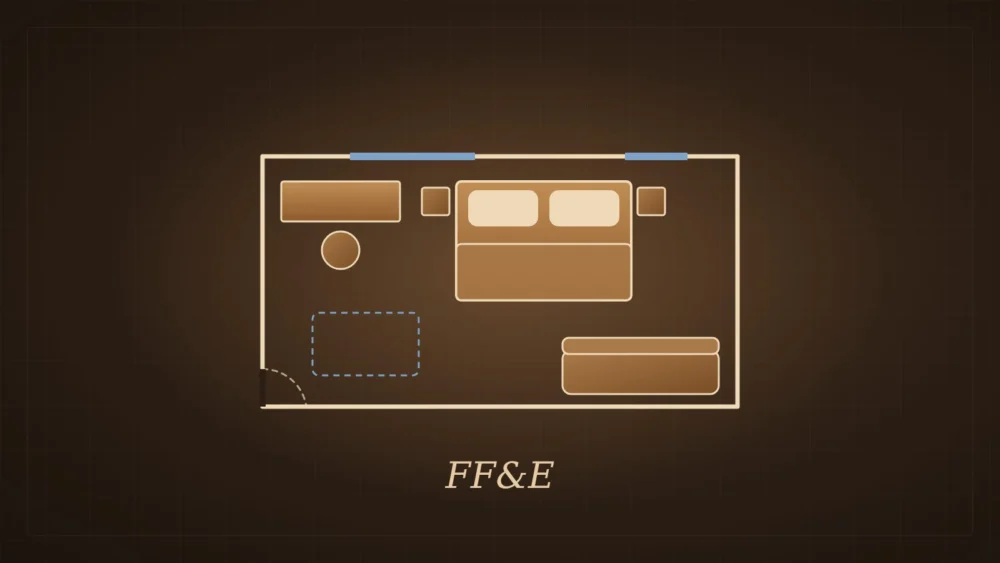
Building a range for hotels or restaurants instead? Read about FF&E procurement. We support wholesale, OEM, ODM and private label; see our services, then browse the collections that can serve as a starting point.