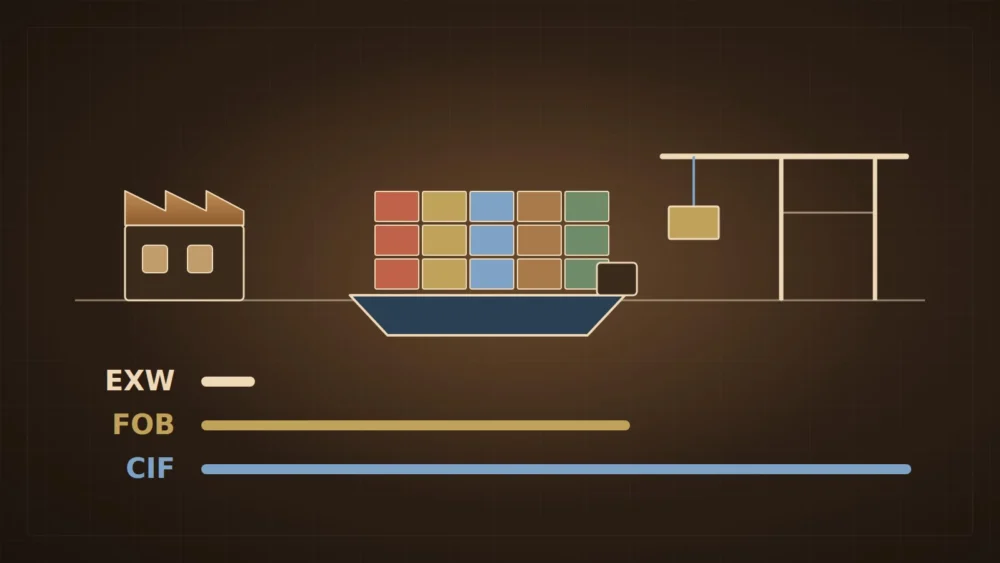
The same furniture can be quoted at three very different prices depending on the shipping term. The product did not change. What changed is how much of the journey the factory is responsible for.
Key takeaways
- EXW leaves almost everything to the buyer; FOB hands over at the port of loading; CIF includes sea freight and minimum insurance.
- Cost and risk move at different points. In CIF, risk still passes at loading.
- Compare quotes only on the same term and the same named port.
- For containers, ask also about FCA, which is often a better fit than FOB.
Three terms, side by side
Incoterms are rules from the International Chamber of Commerce that define who does what in a sale. The three below cover most furniture shipments by sea.
| Term | Seller handles | Buyer handles | Best for |
|---|---|---|---|
| EXW | Goods ready at the factory | Loading, export clearance, freight, insurance, import | Experienced buyers with their own forwarder in the origin country |
| FOB | Export clearance and loading on board at the named port | Sea freight, insurance, import clearance | Buyers who want control of freight and cost |
| CIF | FOB plus sea freight and minimum insurance to the destination port | Import clearance and onward delivery | Buyers who prefer one all-in price to the port |
Where cost and risk move
- CostUnder CIF the seller pays sea freight and minimum insurance. Under FOB you pay freight yourself, so the FOB price is lower but your total cost is the same or better when you compare fairly.
- RiskUnder both FOB and CIF, risk passes to you when the goods are on board at the loading port. CIF does not mean the seller carries risk during the voyage.
- ControlWith FOB you pick the forwarder, the shipping line and the insurance. With CIF the seller picks them.
Always write the term with a named place, for example “FOB” followed by the port. A term without a place leaves room for argument later.
Not sure which term suits your order?
Tell us your destination and we can quote on the term you prefer.
How to choose
- New to importing? FOB gives you clear steps and cost transparency.
- Own a trusted forwarder? FOB or EXW can reduce cost.
- Want a single price to your port? CIF is convenient, but ask for the insurance cover in writing.
- Shipping containers from a depot or a factory? Ask about FCA as an alternative to FOB.
Terms are only half of a good plan. Estimate your CBM and container load first, then see our shipping information for how export packing and delivery terms work with us.
Frequently asked questions
Which Incoterm is best for a first-time importer?
FOB is a common choice because the factory handles export clearance and loading, and you choose the freight forwarder. CIF is simpler on paper but gives you less control over freight and insurance.
Does CIF mean I am covered until delivery?
Not necessarily. Under CIF the seller buys insurance with minimum cover, but risk of loss passes to the buyer once goods are loaded on the vessel. Many buyers arrange broader cover themselves.
Who pays import duties under these terms?
Under EXW, FOB and CIF the buyer handles import clearance, duties and taxes at destination.